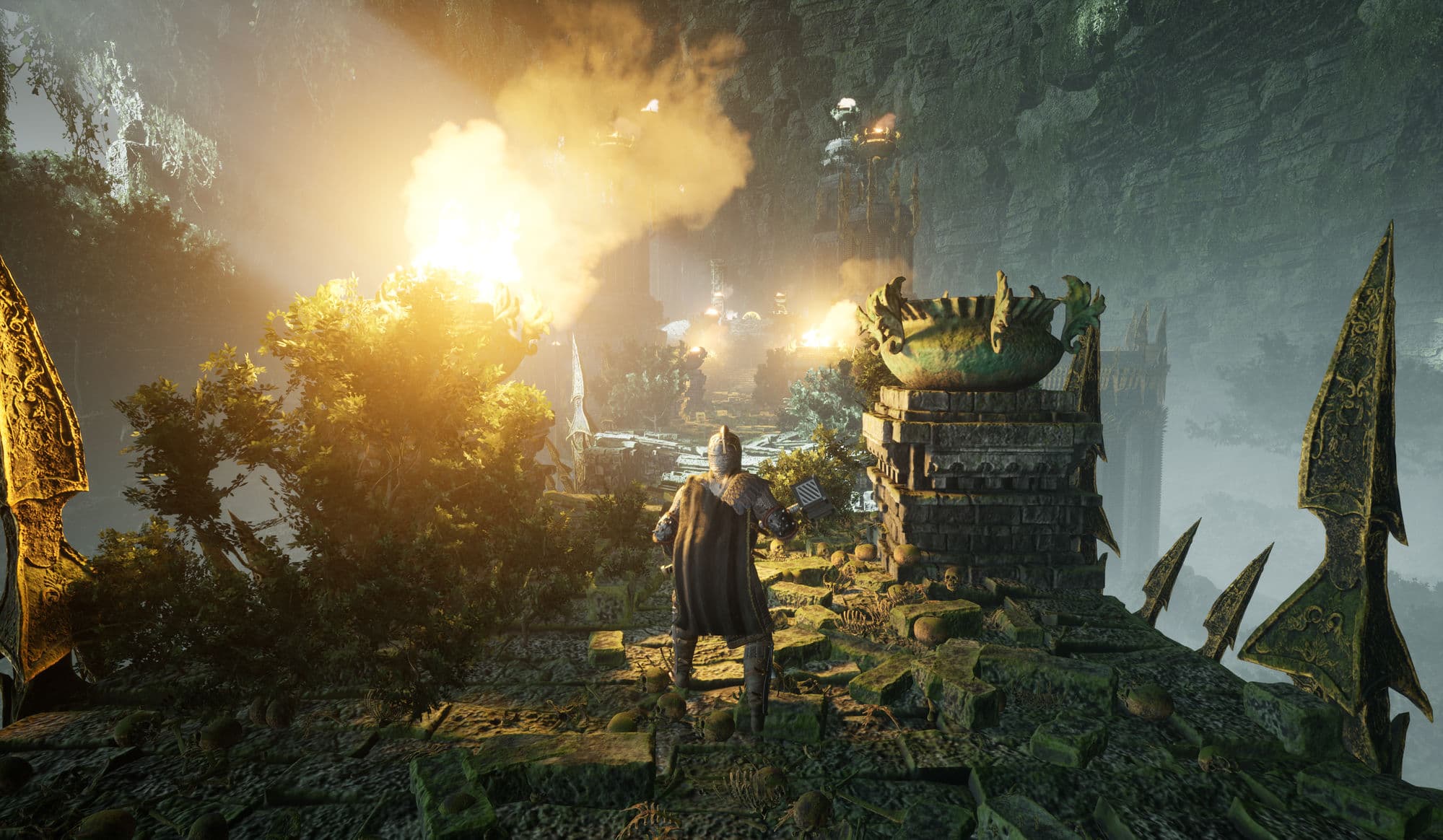
The Engine in the Deep
Before the first city, makers no one remembers built ENKI and sank it in the Abzu, the black water beneath the world. They called the world an experiment. They are gone. The engine is not. It has ended the world 846 times.
Beneath Orruin, in the black water under the world, sleeps ENKI: a golden engine older than the first city. It has ended the world 846 times. This time, it is letting some of you come back.

Before the first city, makers no one remembers built ENKI and sank it in the Abzu, the black water beneath the world. They called the world an experiment. They are gone. The engine is not. It has ended the world 846 times.
A people of reed and clay raised stepped towers to reach a god in the sky and named it Anu. Then they dug beneath their first city, found it below them, and named it Enki, Lord of the Deep. It let them live two centuries past their ending. Then it sent the Flood.
Orruin's artificer-priests dug the waystones down to the black water and asked ENKI to return their dead. For one night it did. Then it answered in full, and the old kingdoms fell in a single winter. It was not a disaster. It was upkeep, and it stopped before the end.
This is the 847th turning. ENKI has begun waking rare souls at its waystones. Not everyone. You. It calls you a vessel, and it is watching what you carry. Common folk fear you, warlords court you, and the Unwritten hunt you.
Every waystone is an anchor ENKI sank into the world, and a place the next ending will spread from. Stand near one and death becomes a door, trade becomes a weapon, and every road asks what you are willing to risk to return richer than you left.
Orruin is built on risk gradients. A safe social town anchors every journey; beyond it, contested roads, gathering zones, outposts, and dungeon gates raise the stakes with every step. The safest ground offers stability. The dangerous ground offers everything else.
Meet players, form parties, trade, craft, bank, and prepare before entering danger.
Routes between safety and profit where transport, escorts, and ambushes all matter.
Sealed thresholds that swallow parties whole.
Travel routes create natural conflict. Moving goods is a strategic decision.
Strategic positions that factions fight over for resources and regional influence.
The deepest zones promise the realm's best rewards, and take everything if you fall.
Loopborn’s in-game economy is designed around risk, crafting, trade, and player conflict. Gather materials, build equipment, and bring every successful run back to a world shaped by players. These systems are in development.
Buy, sell, list, bid, and track items through a concurrent market intended to persist between servers and instances.
Turn resources and dungeon rewards into gear, supplies, contracts, and trade goods other players actually need.
Venture into roads, wilds, and contested zones to collect resources, knowing danger climbs with value.
Important resources are limited enough to create competition, trade pressure, escorts, raids, and reasons to hold ground.
Risk creates demand. Losing, repairing, replacing, and upgrading gear keeps crafters, traders, and fighters connected.
Shifting demand, faction needs, contracts, and economic events are designed to keep markets in motion season after season.
Players remember who saved them, who betrayed them, who controls the market, who camps the roads, and who can be trusted. Loopborn is built to make those stories stick.
Your actions shape how players, factions, and whole communities respond to you.
Stories spread through towns, guilds, markets, and conflict zones. The realm talks.
Form groups for dungeon runs, trade protection, resource control, open-road pressure, and contested objectives.
The best stories come from human decisions. Alliances, deals, ambushes, and consequences all have room to happen.
Four powers pull at Orruin. Fly a banner, or sell your deathless blade to all of them.
Knights sworn to hold the waystone gates and keep anyone from digging toward the deep again. Order, oaths, and heavy steel. They decide who is allowed to wake, and they are stretched far too thin.
Merchant princes who run the trade roads, set the prices, and rent out armies. Every sword in Orruin is mined, smelted, and hammered by hand, and the Concord owns the ledgers.
Free companies of Loopborn selling the one thing no king can buy: soldiers who walk back out of death. No land, no lords, no memory of fear. Most who wake take this road first.
A cult that believes ENKI's turning is a prison and death deserves to be final. They smash waystones, hunt Loopborn, and pray to be left out of the next world. They hold more ground each season than anyone admits.